The Essential Face Painting Handbook | Pilar's Face Painting
The Essential Face Painting Handbook: From Safety to Masterful Results
Key Takeaways
- Cosmetic-grade, water-activated paints are the only safe choice for skin application.
- Professional brands like Fusion and Diamond FX offer superior pigment and easier removal than craft kits.
- Hygiene protocols, including fresh water and clean sponges for every child, prevent the spread of bacteria.
- Patch testing and adhering to age guidelines protect sensitive skin and ensure a positive experience.
We believe every event deserves a splash of colour and a lot of joy. Whether we are setting up for a sunny birthday party in Botany or a large-scale corporate family day in the Auckland CBD, the magic of face painting starts with one thing: the quality of the products we use. Choosing what kind of paint to use for face painting is the most important decision an artist or parent can make. It dictates how vibrant the design looks, how comfortable it feels on the skin, and most importantly, how safe it is for the little ones involved.
Our team at Pilar's Face Painting prioritises safety and professionalism in everything we do. We use high-quality, non-toxic materials to ensure every transformation is as safe as it is beautiful.
The Gold Standard: Cosmetic-Grade Paints
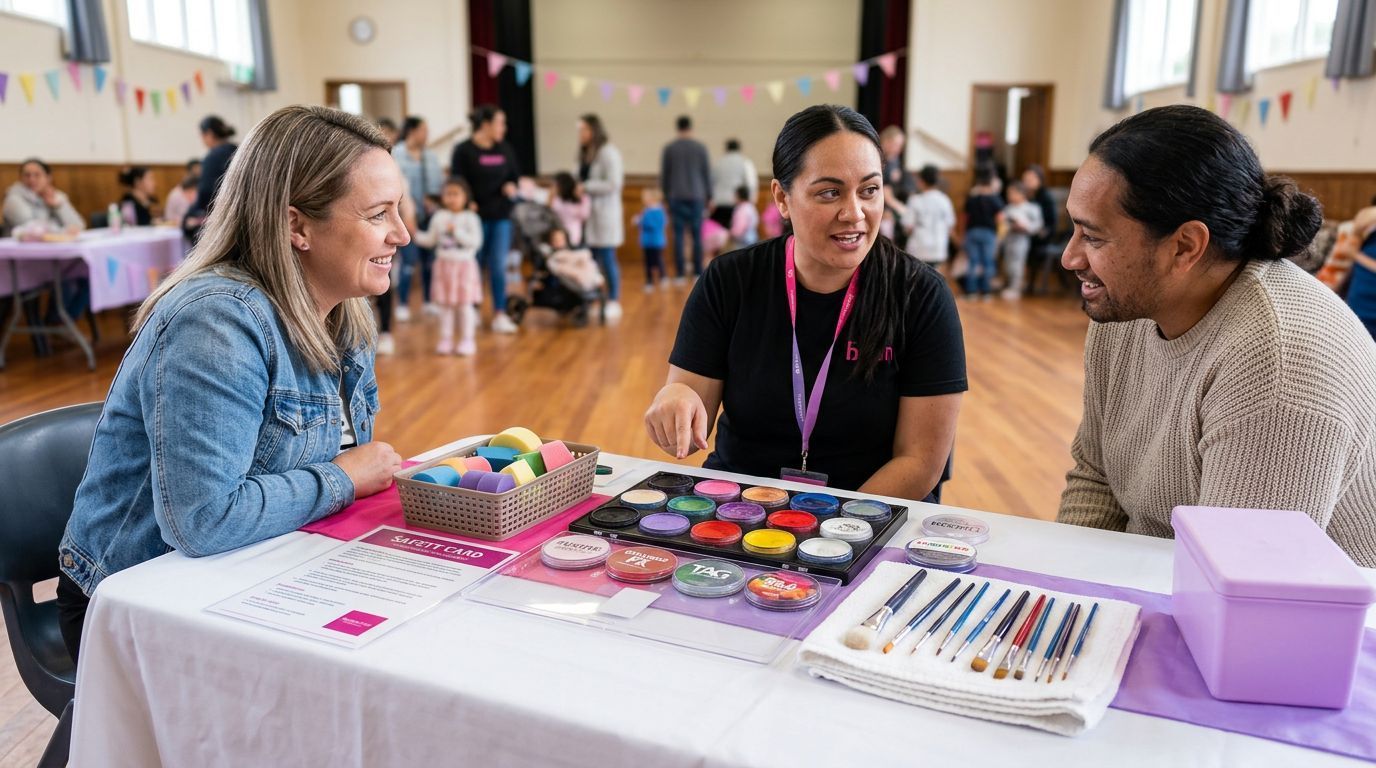
The most vital rule in face painting is to use only cosmetic-grade, water-activated products. These paints are specifically formulated for use on human skin and comply with strict FDA and EU cosmetic regulations. Unlike craft materials, these products undergo rigorous testing to ensure they are free from heavy metals and harmful dyes.
Safe face paints are usually water-based, meaning they dry quickly and remain flexible on the skin. This prevents the "tight" feeling that leads to itching and scratching. When you look at a professional kit, you will see brands like Fusion Body Art, Diamond FX, TAG, and Snazaroo. These manufacturers provide full ingredient transparency, which is essential for managing potential allergies.
Why "Non-Toxic" Labels Can Be Misleading
A common misconception is that any product labelled "non-toxic" is safe for the face. Labels on acrylics, tempera, or poster paints often carry the ASTM D-4236 designation. This standard indicates that the product is safe if accidentally ingested in small amounts while painting on paper, but it does not account for prolonged contact with facial skin. Non-toxic craft materials often contain pigments and preservatives that cause severe allergic reactions or chemical burns when applied to the face.
Acrylic craft paint is designed to stick to porous surfaces like wood or canvas. On skin, it creates a plastic-like film that traps sweat and bacteria, often leading to painful rashes. We strictly avoid these materials, sticking instead to professional cosmetic cakes that allow the skin to breathe.
Understanding Different Paint Bases
Professional artists choose their paints based on the desired effect and the environment of the event. Take a face painter at a busy community festival in Manukau, for example. They might choose a wax-based paint like Diamond FX or Wolfe FX for crisp linework that stays sharp even if a child is running around in the heat. Paraffin wax bases provide a durable finish that resists smudging.
For large areas of colour or soft blending, glycerin-based paints like Mehron Paradise or Superstar are the preferred choice. These are softer, feel incredibly light on the skin, and are often the easiest to wash off at the end of the day. Most professional setups use a combination of both to achieve the best results. You can see how these different bases create vibrant, professional finishes by viewing our Face Painting Gallery.
Safety Standards for Sensitive Skin
Protecting the skin is our primary responsibility. Health authorities, including the Government of Western Australia, recommend avoiding face painting for children under three years old. Younger children have thinner, more permeable skin and are more likely to rub paint into their eyes or mouths. For toddlers, we often suggest a small design on the hand or arm as a safer, gentler alternative.
If a child has a history of allergies or sensitive skin, we always recommend a patch test. We apply a small amount of paint to the inside of the wrist or elbow and wait 20 to 30 minutes. If the skin remains clear, we proceed with the design. We also have a strict policy against painting over broken skin, eczema, cold sores, or any signs of infection to ensure the safety of every child in the queue.
Hygiene Protocols That Matter
Professional face painting requires more than just good art. It requires a commitment to hygiene that prevents the spread of germs. We use a fresh sponge for every single child and clean our brushes thoroughly between clients. Our water is changed frequently, ensuring we only ever use clean, drinkable water to activate our paints.
Between events, we deep-clean our kits. This involves air-drying our paint cakes to prevent mould growth and sanitising our tools with 70% isopropyl alcohol. These steps ensure that the kit remains as clean on the hundredth face as it was on the first. Parents should always look for a tidy workstation and an artist who prioritises these sanitisation steps.
Masterful Results Through Professional Tools
The difference between a DIY kit and a professional service often comes down to the tools. We use high-density sponges that load the paint evenly, preventing the "cakey" look that leads to cracking. Our brushes are made from synthetic fibres designed to hold the right amount of water and pigment, allowing for smooth, fluid strokes.
We also use cosmetic-grade glitter. Unlike craft glitter, which is made of sharp-edged metal or plastic, cosmetic glitter is made of rounded polyester. This makes it safe for use near the eyes, as it will not scratch the cornea if a stray flake happens to fall. This attention to detail ensures the experience is joyful from the moment the brush touches the skin until the paint is washed off at home.
Tips for Easy Removal
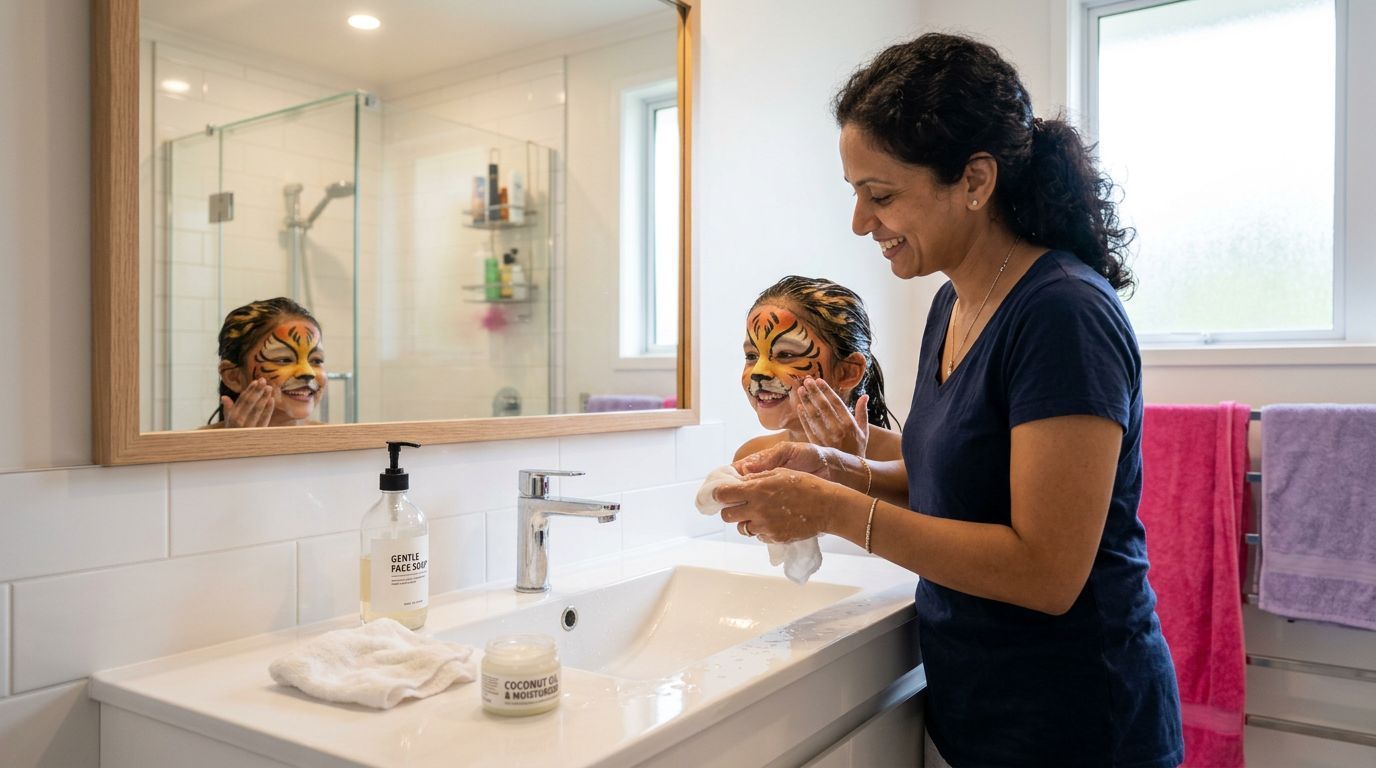
High-quality paints are designed to be easy to remove. The best method is to use mild soap and lukewarm water first. Massaging the soap into the design breaks down the pigments before you add water. Avoid using harsh scrubbing or alcohol-based wipes, as these can irritate the skin. If a slight tint remains from a high-pigment colour like teal or dark green, a small amount of coconut oil or moisturiser will usually lift the remaining shadow.
We take pride in bringing professional standards to every Auckland event. By using the right paints and following strict safety guidelines, we ensure that the only thing left behind after a party are wonderful memories. If you are ready to book a safe, colourful, and professional experience for your next celebration, please Contact Us to discuss our packages.
Recent Posts